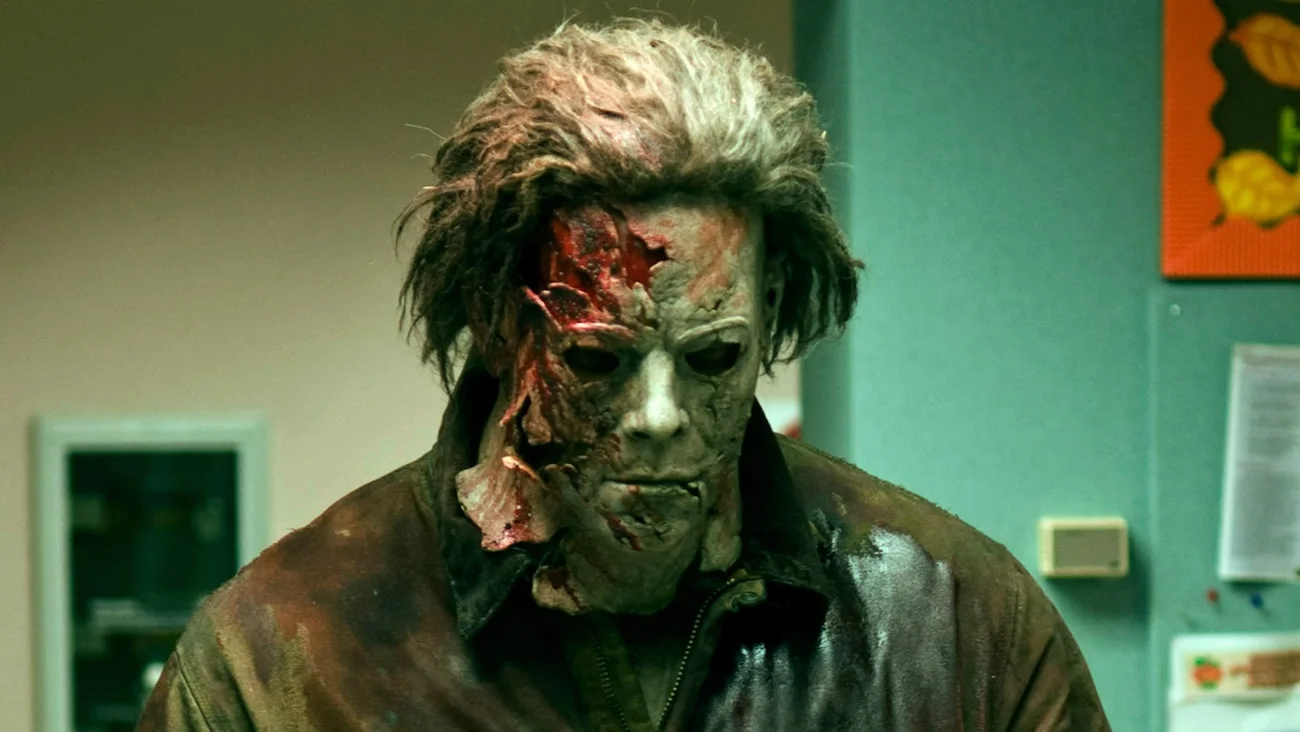
Halloween II (2009)
 Jay Wilde
The Hook
The first thing you hear in the Halloween II trailer is not a scream. It is the slow, mournful opening of the Moody Blues' "Nights in White Satin," drifting over images of blood, breakdown, and small-town decay. It is a disorienting choice, and it tells you everything you need to know about the movie you are about to watch. This is not your Halloween sequel. This is not even really a slasher film in any conventional sense. This is Rob Zombie using the franchise as a canvas for something more personal, more abrasive, and more emotionally raw than the genre typically allows.
The trailer for Halloween II arrived in 2009 carrying the weight of enormous expectations and equally enormous baggage. Zombie's 2007 Halloween remake had been deeply divisive, splitting audiences right down the middle. Half loved the fresh take on Michael Myers' origin. The other half thought it was an assault on Carpenter's legacy. Zombie found himself in an impossible position. The franchise faithful wanted more. The detractors wanted him gone entirely. And Zombie himself wanted to make something the franchise had never attempted before.
What he came up with was a sequel that picks up literally minutes after the first film ends. Laurie Strode is in shock, covered in blood, barely able to speak. Sheriff Brackett is processing the aftermath. And Michael Myers is still out there, wounded but not finished. There is no reset button. No time jump that lets everyone pretend the trauma has faded. Zombie drops you straight into the worst night of these characters' lives and dares you to keep watching. The trailer promises a movie that is less interested in the mechanics of the hunt than in the psychological wreckage left behind. It promises a horror film that is genuinely, unpleasantly honest about what it would actually feel like to survive something like this.
What makes the trailer so effective is its refusal to behave like a franchise sequel. The colour palette is grimy and desaturated, all browns and greys and the occasional splash of arterial red. The violence is quick and ugly rather than choreographed and spectacular. The characters look exhausted rather than heroic. There are images of Laurie wandering through empty streets covered in blood, of Michael's hands clawing through dirt, of a white horse standing motionless in a field. Nothing about this trailer screams blockbuster entertainment. It screams art-house horror, and that tension between expectation and execution is exactly what makes it so compelling.
The production history behind the film only adds to its mystique. Zombie has spoken openly about his clashes with Dimension Films, with Bob Weinstein personally calling to complain about creative choices he found too strange or too dark. The studio wanted a conventional slasher sequel. Zombie wanted to make a film about trauma and its aftermath. The movie that emerged from those battles is neither fish nor fowl, and that is precisely what makes it fascinating. It is a franchise film made by someone who was clearly fighting the franchise every step of the way, and you can feel that fight in every frame.
The Movie
Halloween II is the most misunderstood entry in the Halloween franchise, and possibly the most interesting. It is also, by almost any conventional measure, a mess. But it is a mess with a thesis, and that thesis is what makes it worth defending fifteen years later.
The central argument is simple and uncomfortable: trauma does not make you stronger. It does not give you a character arc. It does not transform you into a final girl with a machete and a quip. It breaks you, and then it keeps breaking you, and the pieces do not fit back together in any neat or satisfying way. Scout Taylor-Compton's Laurie Strode is not a hero. She is a nineteen-year-old girl who has just been through the worst night of her life, and this sequel follows her as she tries and fails to function in the days that follow. She lashes out at the people trying to help her. She self-medicates. She has violent outbursts. She is not likeable, and the movie does not ask you to like her. It asks you to recognise her.
This is what makes Halloween II radical within its franchise and its genre. The slasher sequel formula demands escalation. Bigger body count, more elaborate set pieces, a final girl who rises to the challenge. Zombie rejects all of it. His follow-up is smaller, meaner, and more claustrophobic than the picture that preceded it. The violence is brutal but not glamorous. The pacing is deliberately uneven, lurching between long stretches of psychological discomfort and sudden eruptions of brutality. The whole thing feels less like a sequel and more like a hangover, the morning after the party when everything hurts and nothing makes sense. There is no catharsis here, no sense of resolution or triumph. Just the slow, grinding work of trying to survive something that was never survivable.
The white horse imagery that runs through the picture is the clearest signal of Zombie's intentions. Michael and Laurie both see visions of their dead mother, often accompanied by a white horse that has no basis in any previous Halloween movie. It is dream logic, not narrative logic, and it gives the work a surreal, almost hallucinatory quality that sets it apart from every other entry in the franchise. Zombie has said in interviews that he was interested in the idea that Michael and Laurie are connected on some level that goes beyond the sibling relationship, that they are two halves of the same damaged psyche. The white horse is the visual expression of that connection, a shared vision that blurs the line between the killer and the victim. It is pretentious. It is also genuinely effective, and the fact that it annoyed audiences who just wanted another slasher sequel is part of the point.
Tyler Mane's Michael Myers is a different animal from the first picture. Where the 2007 movie spent time building Michael's backstory, Halloween II strips all of that away and returns him to something closer to the Shape from Carpenter's original. He is relentless, silent, and almost entirely without motivation. He does not stalk. He does not strategise. He simply walks forward, and nothing stops him. It is a deliberate creative choice, and it works. By removing the psychological scaffolding, Zombie makes Michael scary again. You cannot understand him. You can only watch him come. Mane's physical presence is enormous, and the way he moves through the frame, unhurried and inevitable, is more unsettling than any amount of running or jumping could achieve.
This sequel's most controversial choice is its treatment of Dr. Loomis. Malcolm McDowell plays him as a man who has become a brand, publishing books and doing talk shows about the Michael Myers case with an enthusiasm that borders on exploitation. It is a sharp, cynical take on the character, and it divided audiences who expected the earnest, haunted Loomis of the original pictures. But Zombie is making a point about how trauma gets commodified, about how the people who survive these events often become products themselves. Loomis is not a hero. He is a man who has built a career on other people's suffering, and this project does not let him off the hook for it. McDowell plays the role with a twinkling, self-satisfied charm that makes him simultaneously likeable and repellent, a man who knows exactly what he is doing and does not care.
What saves Halloween II from being simply an exercise in misery is its honesty. Zombie is not being cruel for the sake of cruelty. He is genuinely interested in what happens to people after the credits roll, after the final girl has been rescued and the ambulance has driven away. The answer, his movie suggests, is that they do not recover. They just learn to function with the damage. That is not a comforting message, but it is a true one, and it gives the picture a weight that most horror sequels do not have. The work does not care about giving you what you want. It cares about showing you something real, even if that something is ugly and uncomfortable and refuses to resolve itself into anything resembling a satisfying narrative.
There is a version of Halloween II that could have been a massive hit. A conventional sequel with a bigger body count, a triumphant final girl, and Michael Myers dispatched in a blaze of glory. Zombie had the budget for it and the franchise name to guarantee an audience. Instead, he made a picture about psychological devastation, about the impossibility of recovery, about two siblings connected by trauma and madness. The fact that he somehow got this project released theatrically, with the Halloween name attached, is one of the minor miracles of modern studio horror. That it is as coherent and as powerful as it is speaks to something in Zombie that the mainstream has never quite known how to handle.
The structure of the movie is itself a provocation. It opens in the immediate wake of the previous picture's events, with Laurie in the ambulance, and then jumps ahead one year. We do not get the immediate aftermath we expect. We get the long tail, the slow decay, the version of survival that nobody wants to watch because it is not survivable. Zombie's camera, through cinematographer Brandon Trost, is grubby and intimate, pushing into faces during conversations with an almost documentary closeness that makes the violence feel invasive rather than entertaining. The grading is desaturated, almost sickly, giving the whole thing the look of a bruise that will not heal. The soundtrack leans heavily into the 1970s, a nod to Carpenter's original that simultaneously grounds the picture and unsettles it, because the familiar songs play over images that are anything but nostalgic.
Perhaps the most underappreciated element of Halloween II is its treatment of the slasher genre's relationship to grief. Most slashers deal in the immediate: the night of the killing, the chase, the final showdown. Zombie deals in the aftermath, in the years-long process of falling apart. Laurie does not get stronger. She does not get closure. She gets a new last name, a roommate, and a series of increasingly bad decisions that this movie watches with something approaching compassion. It is an anti-slasher sequel, and it is fascinating precisely because it refuses to give the audience the catharsis it has been trained to expect.
What elevates Halloween II above mere provocation is the specificity of its psychological portrait. Zombie is not interested in generic trauma. He is interested in the particular way that Laurie Strode processes what happened to her, which is to say: badly, inconsistently, and without any of the clarity that therapy-speak would suggest is possible. She is angry at the wrong people. She pushes away the ones who care. She reaches for substances and situations that she knows will make things worse, not because she is stupid but because the pain is so constant that anything offering even temporary relief feels worth the cost. Taylor-Compton plays all of this with a raw, unguarded quality that is genuinely difficult to watch, and the trust Zombie places in her performance is one of this movie's quiet strengths. He lets her be unlikeable, lets her be selfish, lets her be a mess, and the result is one of the most honest depictions of post-traumatic stress in the entire slasher genre.
The People
The production of Halloween II was, by all accounts, a deeply unpleasant experience for almost everyone involved. Rob Zombie has spoken candidly about his clashes with Bob Weinstein and Dimension Films, who wanted a more conventional slasher sequel and were increasingly alarmed by the direction Zombie was taking. The studio wanted the white horse dream sequences cut. They wanted more traditional kills. They wanted the film to look and feel like a Halloween movie, and Zombie was making something that looked and felt like a Rob Zombie movie. The tension between those two visions is visible in every frame, and the fact that the film is as coherent as it is speaks to Zombie's stubbornness.
Things got so bad that Zombie had a full behind-the-scenes documentary crew shooting on set throughout production, capturing the chaos in real time. He compiled the footage into what was reportedly an eight-hour tell-all documentary about the making of the film. The Weinsteins buried it. Zombie has said the documentary showed "just how messed up everything was," and fans have never seen it. On the Howie Mandel Does Stuff podcast, Zombie recalled that Bob Weinstein was "constantly screaming at him" throughout the production of both Halloween films. He described the experience as an "absolute nightmare" and admitted he only agreed to make Halloween II because he wanted to finish the story and get away from the Weinstein Company for good. It is the last time he ever worked with Dimension Films.
Scout Taylor-Compton has talked about the physical and emotional toll of playing Laurie Strode across two films. She was a teenager when she was cast, and the role required her to spend months portraying a character in various states of psychological collapse. She has described the experience as formative but exhausting, and there is a rawness to her performance in Halloween II that feels genuinely lived-in. She is not acting traumatised. She is channelling something real, and the camera captures it with an intimacy that is sometimes uncomfortable to watch. In a 2022 retrospective interview, she looked back on the role with a mix of pride and exhaustion, acknowledging that the intensity of the character stayed with her long after the cameras stopped rolling. She has said the vibe on the set of Halloween II was similar to the first film, but the weight of knowing where Laurie's story was heading made the sequel emotionally heavier to shoot.
Malcolm McDowell brought a sardonic edge to Dr. Loomis that was entirely his own invention. He has talked about playing the character as a man who has become addicted to his own celebrity, who cannot stop talking about Michael Myers because Michael Myers is the most interesting thing that ever happened to him. It is a performance that works on multiple levels, and McDowell clearly relished the chance to play against type. His Loomis is not a protector. He is a parasite, feeding off the tragedy he claims to be documenting. In interviews at the time of release, McDowell described Loomis as "a man who has turned his patient's notoriety into his own brand," and he played the role with a slimy, self-satisfied energy that made the character feel like a horror-film version of a TED Talk speaker. He was having fun, and that fun is infectious, even when the material around him is bleak.
Tyler Mane, as Michael Myers, had the unenviable task of following up a performance that had already redefined the character. His approach was to strip away everything that could be considered human and return Michael to a force of nature. Mane is enormous in the role, physically imposing in a way that makes every encounter feel dangerous, and he moves with a deliberate, unhurried gait that is more unsettling than any amount of running could be. He has talked about the challenge of performing in the Myers mask, which limits facial expression and forces the actor to communicate entirely through body language. The result is a Michael who feels genuinely inhuman, a thing that walks and kills and does not stop. Mane's physicality is the one consistent thread of menace in a film that otherwise shifts tones wildly, and his commitment to the role is total.
Sheri Moon Zombie, as Deborah Myers, appears primarily in the dream sequences, and her presence gives the film much of its emotional texture. She is the ghost that haunts both Michael and Laurie, the absent mother whose death set everything in motion, and Sheri Moon Zombie plays her with a warmth and sadness that contrasts sharply with the brutality surrounding her. Brad Dourif, as Sheriff Brackett, brings a weary gravitas to the role of a man who has seen too much and knows that the worst is still coming. Dourif's Brackett is a man hollowed out by grief, and he plays the role with a quiet devastation that grounds the film's more surreal moments.
Danielle Harris, as Annie Brackett, brought a unique history to the Halloween franchise. She had already played Jamie Lloyd, the original series' young heroine, in Halloween 4 and Halloween 5, making her the first actor to appear in both the original continuity and Zombie's reboot. Her Annie is tougher and more abrasive than the original film's version, and Harris has talked about enjoying the chance to play a character who was less innocent and more confrontational. She and Scout Taylor-Compton developed a genuine rapport on set, and their scenes together have a sisterly friction that feels authentic.
Zombie also filled the margins with cameos that reflected his own tastes. "Weird Al" Yankovic appears in a brief cameo, a nod to Zombie's love of pop-culture absurdity. Margot Kidder, in one of her final film roles, appears as a customer in a strip club, a casting choice that feels like a quiet tribute to an actress who had been a genre icon decades earlier. These small touches give the film a sense of personality that the studio clearly did not ask for and probably did not want.
The Craft
Halloween II looks like no other film in the Halloween franchise, and that is entirely deliberate. Zombie and his cinematographer, Michael Fagondes, shoot the film in a desaturated, almost washed-out palette that evokes the grimy, depressed atmosphere of small-town America in economic decline. The Haddonfield of Halloween II is not the cosy suburban nightmare of Carpenter's original. It is a town that is dying, full of strip malls and trailer parks and people who have given up. The production design leans into this aesthetic, creating environments that feel genuinely lived-in and genuinely depressing. Every set is dressed with the kind of clutter and grime that you can almost smell through the screen. It is the opposite of the polished, studio-clean look that most horror sequels default to, and it gives the film a texture that is closer to a Terrence Malick film than a slasher movie.
The film was shot primarily in Georgia, across locations including Atlanta, Covington, Decatur, Madison, and Newborn, with filming running from February 23 to April 9, 2009. The Southern Gothic atmosphere seeps into every frame. The landscapes are flat and grey, the interiors are cramped and cluttered, and there is a pervasive sense of decay that mirrors the characters' psychological states. The Georgia locations give the film a humidity and heaviness that you cannot fake. The woods are dense and dark, the houses are weathered, and the strip clubs and motels have the kind of fluorescent-lit squalor that feels documentary-real. Zombie uses handheld camera work extensively, giving the film a documentary-like immediacy that makes the violence feel more real and more disturbing. The camera does not flinch, and it does not cut away. It watches, and it makes you watch too.
Tyler Bates' score is one of the film's most underappreciated elements. Where the 2007 film relied heavily on Carpenter's original themes, Halloween II uses them sparingly, saving the iconic piano riff for the final scene. In between, Bates creates a soundscape that is experimental, dissonant, and deeply unsettling. He layers industrial noise over orchestral arrangements, creating a sonic texture that mirrors the fractured mental states of the characters. Bates composed original cues like "Nurse Killa" that blend grinding electronics with mournful strings, and the result is a score that feels like it is scoring the characters' internal collapse rather than the external action. The use of "Nights in White Satin" by The Moody Blues in the film is inspired, its melancholy beauty providing a counterpoint to the on-screen brutality that is genuinely haunting. Zombie also peppers the soundtrack with songs that reflect his own musical tastes, creating a sonic identity that is distinctly his own and distinctly at odds with what a Halloween film is supposed to sound like.
The editing is deliberately jarring, cutting between scenes with a rhythm that keeps the audience off-balance. Zombie uses jump cuts and abrupt transitions to create a sense of disorientation, and the pacing alternates between long, slow stretches of psychological tension and sudden, explosive violence. It is not a comfortable viewing experience, but it is an intentional one. The film wants you to feel the same unease that its characters are feeling, and the editing is the primary tool for achieving that effect. The cross-cutting between Laurie's psychological deterioration and Michael's relentless advance creates a parallel structure that builds dread even in scenes where nothing overtly violent is happening. The film's most effective scare moments come not from jump scares but from the slow, suffocating accumulation of dread that the editing creates.
The practical effects are brutal and unglamorous. Zombie has always been a fan of old-school gore effects, and Halloween II delivers some of the most visceral kill scenes in the franchise. But they are not played for thrills. They are played for impact, and the camera lingers on the aftermath in a way that forces you to confront the reality of what you are seeing. It is horror filmmaking that respects its audience enough to trust them with something genuinely unpleasant. The violence in Halloween II has a weight and consequence that most slasher films avoid. People do not just die and disappear. The camera stays with the bodies, with the blood, with the mess, and it forces you to sit with the horror of what has happened. It is an approach that owes more to the grimy realism of 1970s exploitation cinema than to the slick, consequence-free violence of modern horror.
The bit that should not work but does is the white horse. Zombie's decision to include surreal dream sequences featuring a white horse could have been laughably pretentious, but in the context of the film's fractured psychological landscape, it becomes a powerful visual metaphor for Laurie's trauma and her connection to Michael. The horse is never explained, never justified, and never rationalised. It simply exists, recurring like a half-remembered nightmare, and its refusal to conform to narrative logic is precisely what makes it effective. It is the kind of creative choice that a studio would normally demand be cut, and the fact that Zombie fought to keep it in the film is one of the reasons Halloween II feels like a personal statement rather than a franchise product.
The Trivia
-
Rob Zombie has said that Bob Weinstein personally called him during production to complain about the white horse dream sequences, calling them "too artsy" and demanding they be cut. Zombie refused, and the sequences stayed in the film. The white horse has since become one of the most debated elements of the entire Halloween franchise.
-
Scout Taylor-Compton was only nineteen years old during filming, making her one of the youngest actors to carry a major horror franchise sequel. She has said in interviews that the experience of playing Laurie Strode across two films had a profound effect on her, and that she still receives messages from fans who connected with the character's struggle.
-
Malcolm McDowell's portrayal of Loomis as a fame-hungry opportunist was a deliberate creative choice by Zombie, who wanted to explore how trauma gets commodified. McDowell has said that he based aspects of the performance on real-life crime authors and documentary filmmakers who build careers on other people's tragedies.
-
Tyler Mane has talked about the physical challenge of performing in the Michael Myers costume, which is hot, restrictive, and limits visibility. He performed many of his own stunts, and the physicality of his performance is one of the film's most effective elements.
-
Zombie only used John Carpenter's original Halloween theme in the final scene of the film, saving it for the moment when Michael and Laurie's story reaches its conclusion. He has said that he and Tyler Bates tried to find other places to include it but ultimately decided that restraint would give it more impact.
-
The film features a number of small casting touches that reward close attention. Margot Kidder, in one of her final film roles, appears briefly as a customer in a strip club, a casting choice that feels like a quiet tribute to an actress who had been a genre icon decades earlier. Brea Grant, who later became a filmmaker in her own right, also appears in a small role. Zombie has a habit of casting actors he admires in bit parts, and these cameos give the film a sense of personality that the studio probably did not ask for.
-
Danielle Harris, who plays Annie Brackett, is a horror film veteran who had previously appeared in the Halloween 4 and 5 films as a child. Her return to the franchise as an adult was a deliberate nod to the series' history, and she brought a toughness to the role that felt distinctly different from her earlier work as Jamie Lloyd.
-
Zombie has said in interviews that Halloween II is the film he is most proud of from his Halloween duology, despite it being the less popular of the two. He has described it as the film he actually wanted to make, free from the constraints of having to retell an existing story.
-
Daeg Faerch, who played young Michael Myers in the 2007 remake, was originally set to return for flashback scenes in Halloween II. However, he had grown too much between films and had to be replaced by Chase Wright Vanek. The recasting is noticeable to eagle-eyed fans, but Vanek does a credible job of maintaining the physicality Faerch established.
-
Rob Zombie compiled footage throughout production for what was reportedly an eight-hour behind-the-scenes documentary about the making of Halloween II. The film captured the constant clashes with Dimension Films and the Weinstein brothers in unflinching detail. The Weinsteins blocked its release, and it has never been publicly seen. Zombie has said the documentary showed "just how messed up everything was," and its suppression remains one of the great lost artifacts of modern horror filmmaking.
-
The original working title for the film was simply "H2," continuing the convention of the franchise's sequels. Zombie later said he wanted the film to feel like a distinct entity rather than just another entry in a series, and the decision to give it the full Halloween II title was part of that effort to set it apart.
The Verdict
Halloween II is not a good film by most conventional standards. It is messy, self-indulgent, and frequently unpleasant to watch. The pacing is uneven, the dream sequences are pretentious, and the treatment of beloved characters borders on contemptuous. If you go in expecting a traditional Halloween sequel, you will be disappointed. If you go in expecting a competent slasher film, you will be frustrated.
But there is something in this film that keeps pulling me back, and I think it is the honesty. Zombie was clearly making a film that nobody in the corridors of power wanted him to make, and he made it anyway, and you can feel that defiance in every frame. It is a film made by a director who was burning out, fighting the studio, and pouring whatever was left into the work. That kind of desperation does not always produce good art, but it always produces interesting art, and Halloween II is nothing if not interesting.
Scout Taylor-Compton gives a performance that deserves more recognition than it has received. Her Laurie is not a hero or an icon. She is a damaged young woman trying to hold herself together in a world that has given her every reason to fall apart, and Taylor-Compton plays her with a rawness and honesty that elevates the entire film. The fact that the character is not likeable is the point. Trauma does not make you likeable. It just makes you tired.
Fifteen years on, Halloween II is due for a reappraisal. Not because it is a hidden masterpiece, but because it is a genuinely interesting film trapped inside a franchise that did not know what to do with it. Zombie had something to say about what horror costs the people who survive it, and he said it in the only language he knows. The fact that the language is abrasive and uncomfortable does not make it less honest. It deserves better than its reputation, and it deserves an audience willing to look past the surface ugliness to find the strange, sad, angry heart underneath.
"I met this six-year-old child with this blank, pale, emotionless face, and the darkest eyes. The devil's eyes."